Introduction
With computers becoming more and more affordable, power per price ratio keeps increasing. One can lay down a couple hundred dollars to an ION or (Jetway) Atom system for their home entertainment or chose from other similar products in its class. But what happens when the 1.60 GHz Dual Core processor in the ION just does not provided the push you need to get things done but buying a full-fledged desktop is just too expensive? Jetway proved that there are still options to be considered. The JNC84-LF is a mini-ATX board which comes with an AM2+/AM3 socket so that the user get to decide just what kind of push they want out of their machine. Read on to find out which qualities this board brings to the table and whether or not it merits the right to be on your consideration list.
A Closer Look
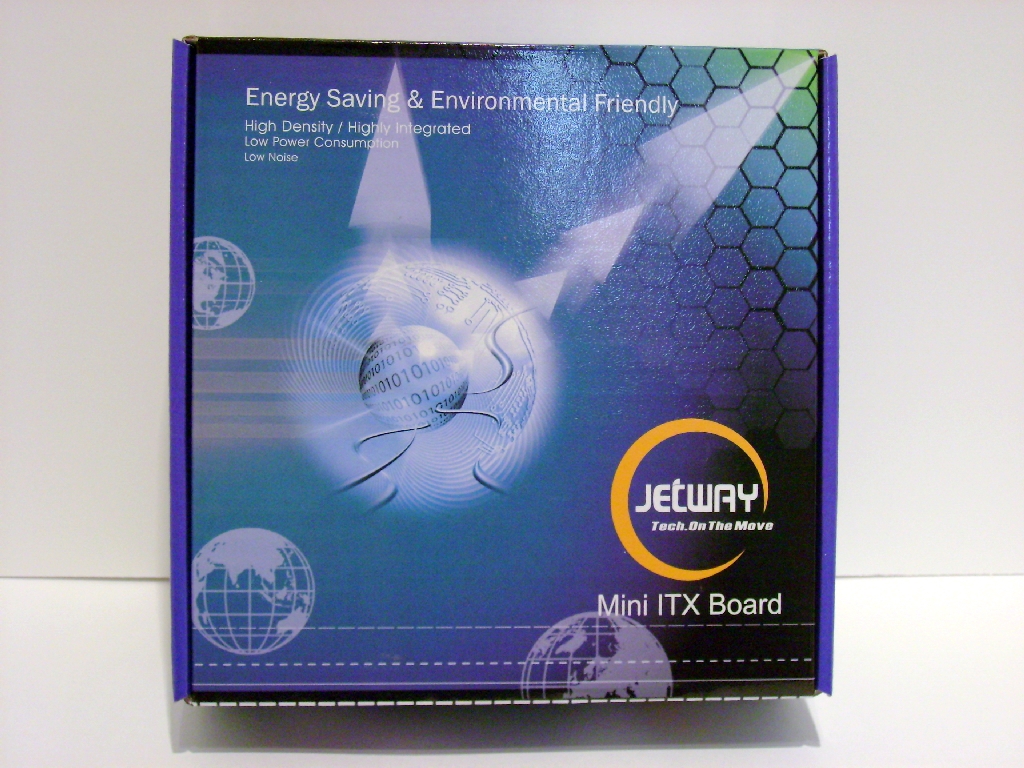
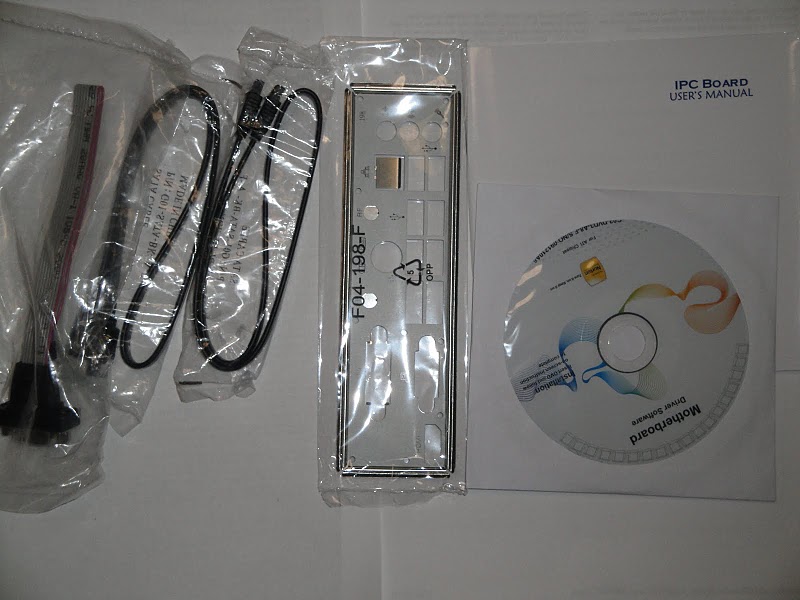
Much like Jetway’s ITX boards, the JNC84-LF comes in a box approximately 1 inch wider than the board. The extra inch is consumed by a plastic bubble/antistatic bag and foam. Along with the board you get 2 SATA Cables, a driver CD, a manual, and a back-plate.
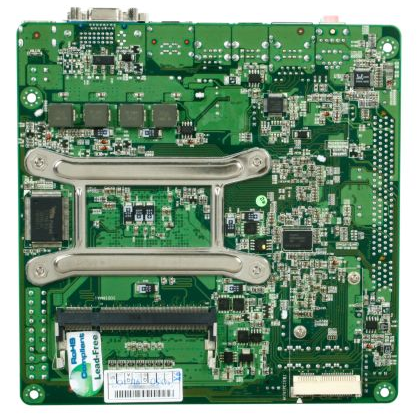
As can be noted by taking a quick glance at the pictures below, JNC84-LF’s design is significantly different from other IPC boards form Jetway. One of key differences aside is the socket. Unlike the previous boards we have reviewed, this board requires the user to buy a separate AM2+/AM3 CPU and cooler. Another key difference between this board and the previous boards are the RAM slots. The boards we reviewed before were DD2 800 MHz desktop memory. The slots on this board are also DDR2 but use laptop memory running at 667 MHz instead. Further modifications to the board design include added USB pins on the motherboard, DVI, HDMI, and VGA outputs.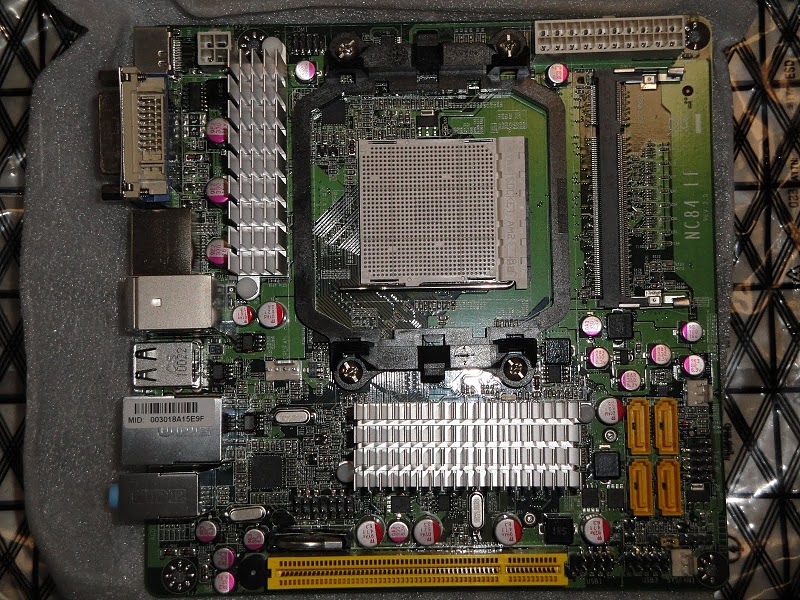
Additionally, unlike the other boards which were powered directly by a 12 VDC jack, the JNC84-LF is powered by a standard 20 pin ATX plug; this should be taken into consideration when deciding on case sizes and features. Most m-ITX cases come with a ~300W power supply and are slightly bigger and heavier than those without.
Specifications
| Supported CPU | |
| CPU Socket Type | AM3/AM2+/AM2 |
| CPU Type | Phenom II / Phenom / Athlon II / Athlon64 /Sempron |
| FSB | 2600MHz Hyper Transport (5200 MT/s) |
| Chipsets | |
| North Bridge | AMD 785G |
| South Bridge | AMD SB750 |
| Memory | |
| Number of Memory Slots | 2×200pin SO-DIMM |
| Memory Standard | DDR2 667/800 |
| Maximum Memory Supported | 4GB |
| Channel Supported | Dual Channel |
| Expansion Slots | |
| PCI Slots | 1 |
| Other Slots | 1 x mini PCI-E |
| Storage Devices | |
| SATA 3Gb/s | 4 |
| SATA RAID | 0/1/5/10 |
| Onboard Video | |
| Onboard Video Chipset | ATI Radeon HD 4200 |
| Onboard Audio | |
| Audio Chipset | Realtek ALC662 |
| Audio Channels | 6 Channels |
| Onboard LAN | |
| LAN Chipset | Realtek 8111DL |
| Max LAN Speed | 10/100/1000Mbps |
| Rear Panel Ports | |
| PS/2 | 1 |
| Video Ports | D-Sub + DVI |
| HDMI | 1 x HDMI |
| USB 1.1/2.0 | 6 x USB 2.0 |
| eSATA | 2 x eSATA 3Gb/s |
| Audio Ports | 3 Ports |
Testing
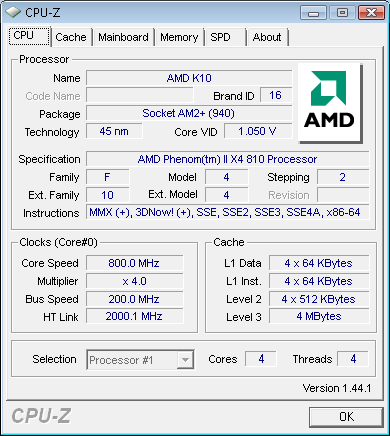
To test the motherboard the following equipments was used:
- Processor: Phenom II X4 810 Socket AM 2+
- RAM: Crucial 2GB 667MHz
- HDD: Patriot WARP 32 GB SSD
–~~~~~~~~~~~~–
Video Rendering
High definition rendering is one of the things that are becoming more and more essential to the average user. The increased output of the processor can be clearly seen when compared to the boards that use the Atom processors. For testing I have used a 720p and 1080p trailer from the movie “Expendables” benchmarked sequentially and over random seeks. The results were as follows:
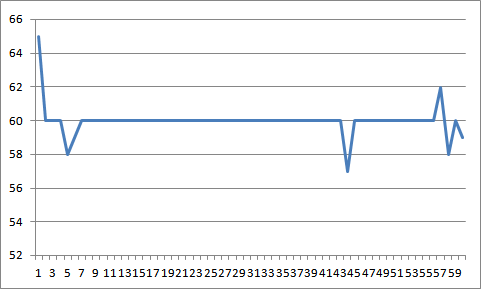
720p Sequential
The JNC84-LF provide fluid playback throughout the entire sample delivering an average of 59.983 frames per second. The minimum and maximum 57 and 65 frames per second respectively.
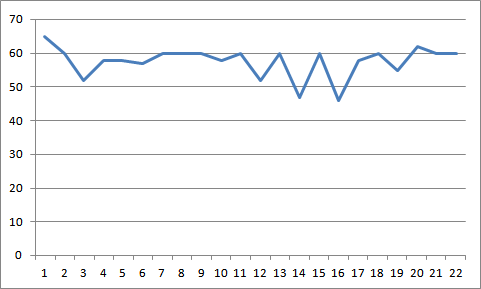
720p Random Seek
The minimum frame rates are more important in this test since we are looking for how fast the computer resumes normal playback speed. For the 720p the minimum frame rate was 39 frames per second.
1080p Sequential
After blowing through the 720p test with flying colors, I decided to challenge the JNC84-LF with rendering a 1080p clip. The minimum and maximum frame rates for this test were 57 and 65 frames per second respectively. The average for the 1080p playback was 59.983 frames per second.
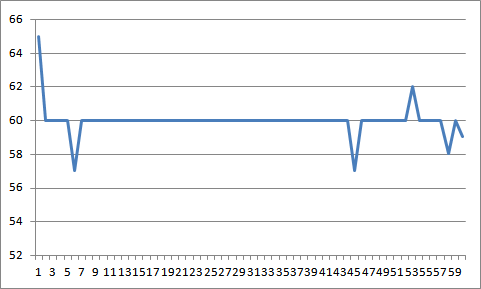
1080p Random Seek
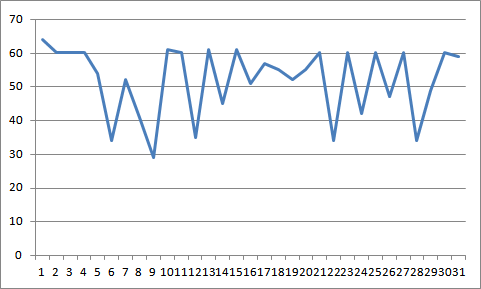
The minimum and maximum frame rates for random seeks of a 1080p are 15 and 69 frames per second respectively. Despite falling below the magic the magic 30 frames per second, the recovery to average speed is quick as can be seen in the images below.
–~~~~~~~~~~~~–
SiSoft Sandra
Processor Arithmetic
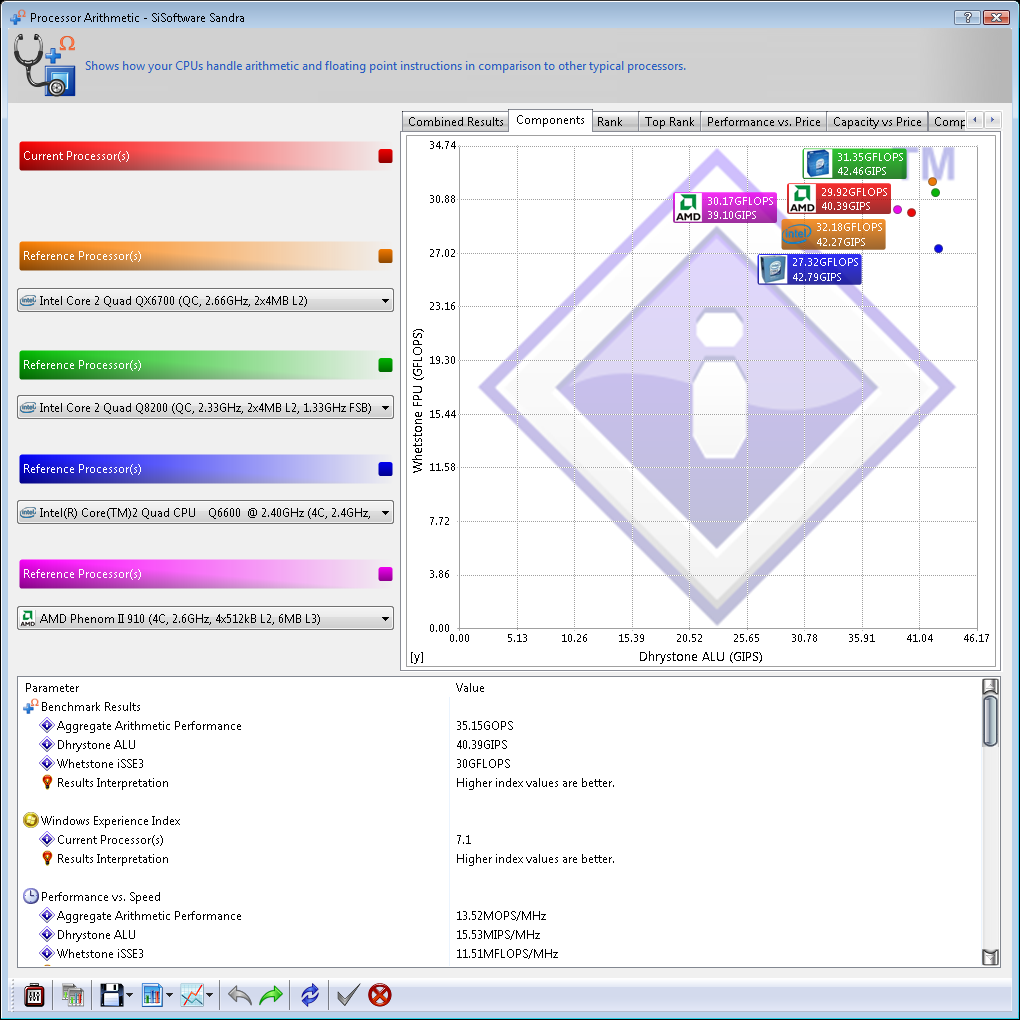
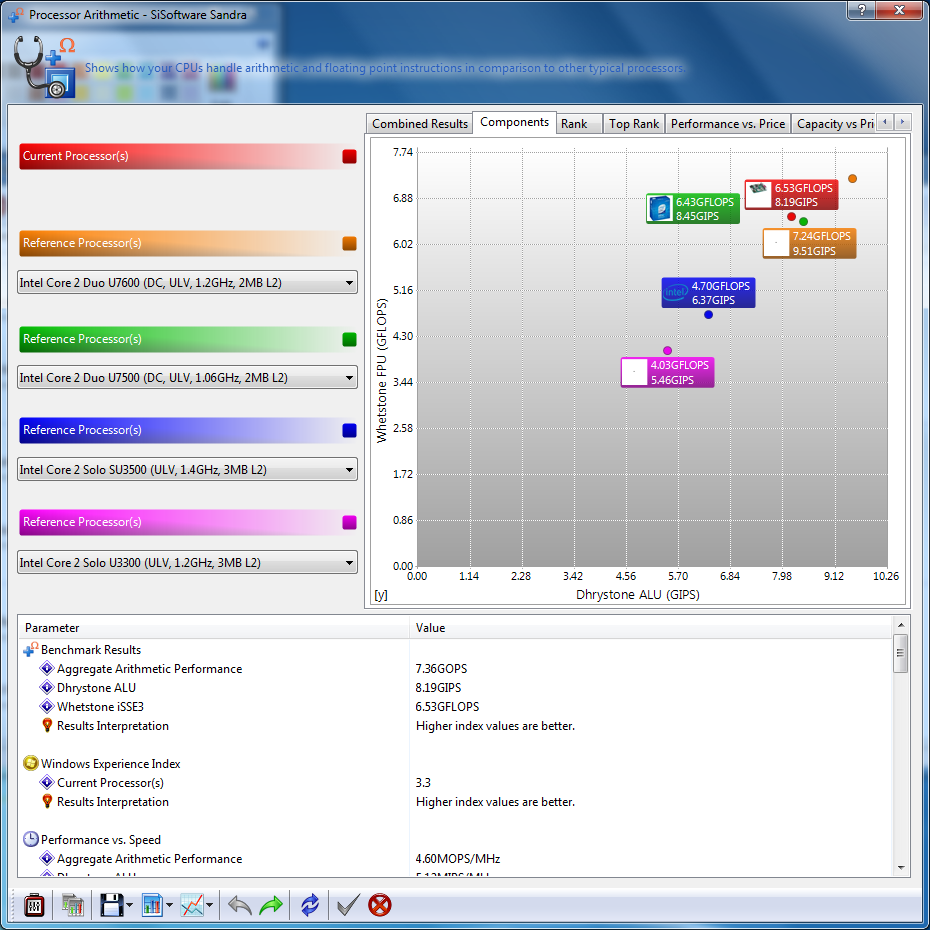
Processor arithmetic is another aspect of the system that is mostly reliant on the processor. Despite the fact that this particular benchmark is not a real-world application benchmark, one can infer the difference in performance by looking at how many operations each of the processors are capable of. As can be seen in the pictures below, the JNC84-LF delivers almost 4 times the performance thanks to the AMD processor.
| JNC84-LF | ION-TOP |
 |
 |
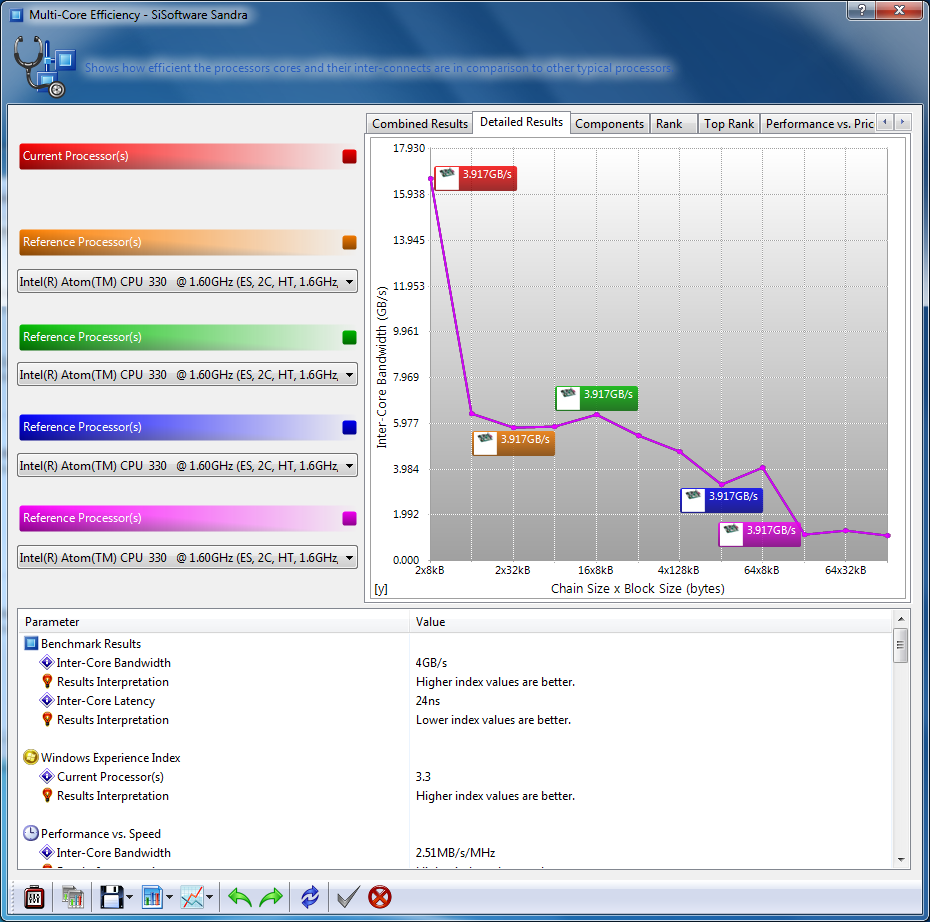
Multi-core Efficiency
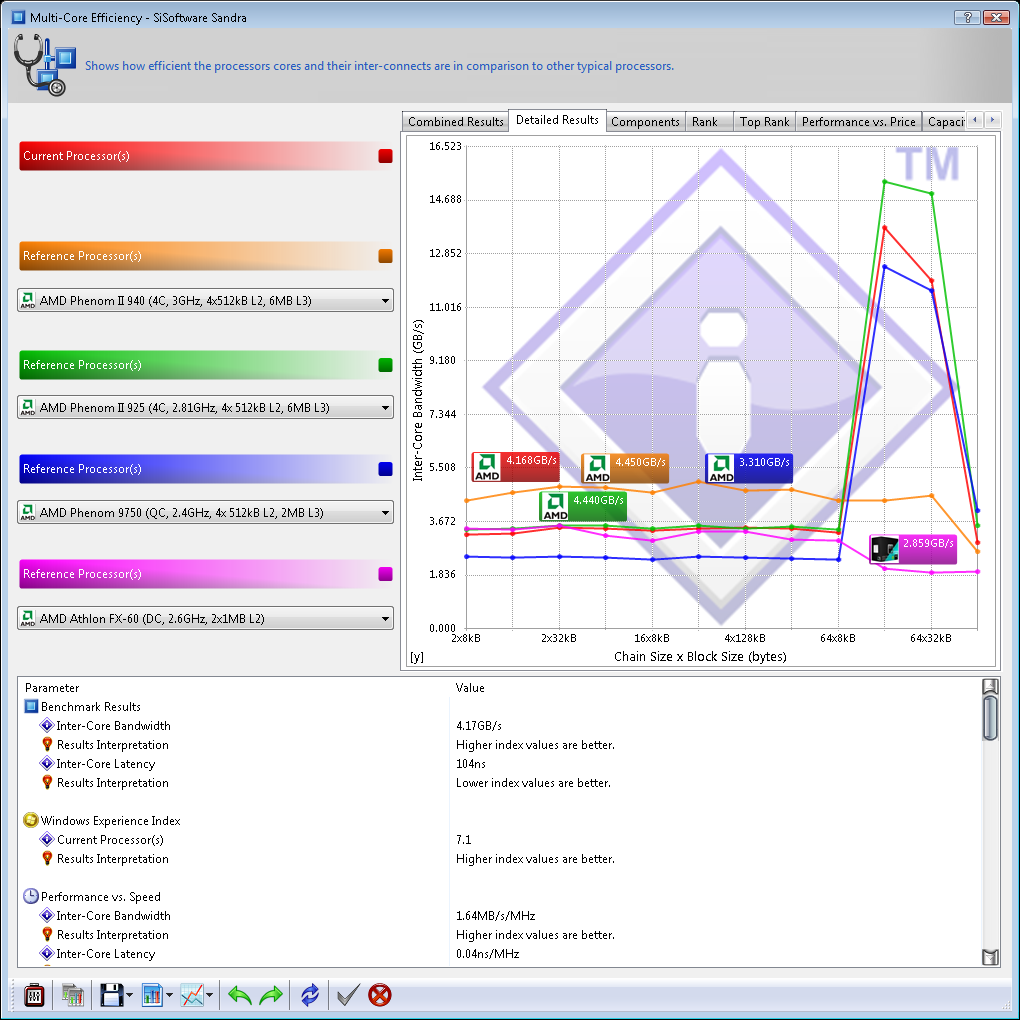
Multi-core efficiency is a benchmark that measures how well different cores in the processor talk to each other. The more efficient core to core communication, the higher the multiplier effect of the cores would be evident. Unlike in the Arithmentic benchmark, the differences in scores is less evident. There was only a 0.2 GB/s different in the core to core communication.
| JNC84-LF | ION-TOP |
 |
 |
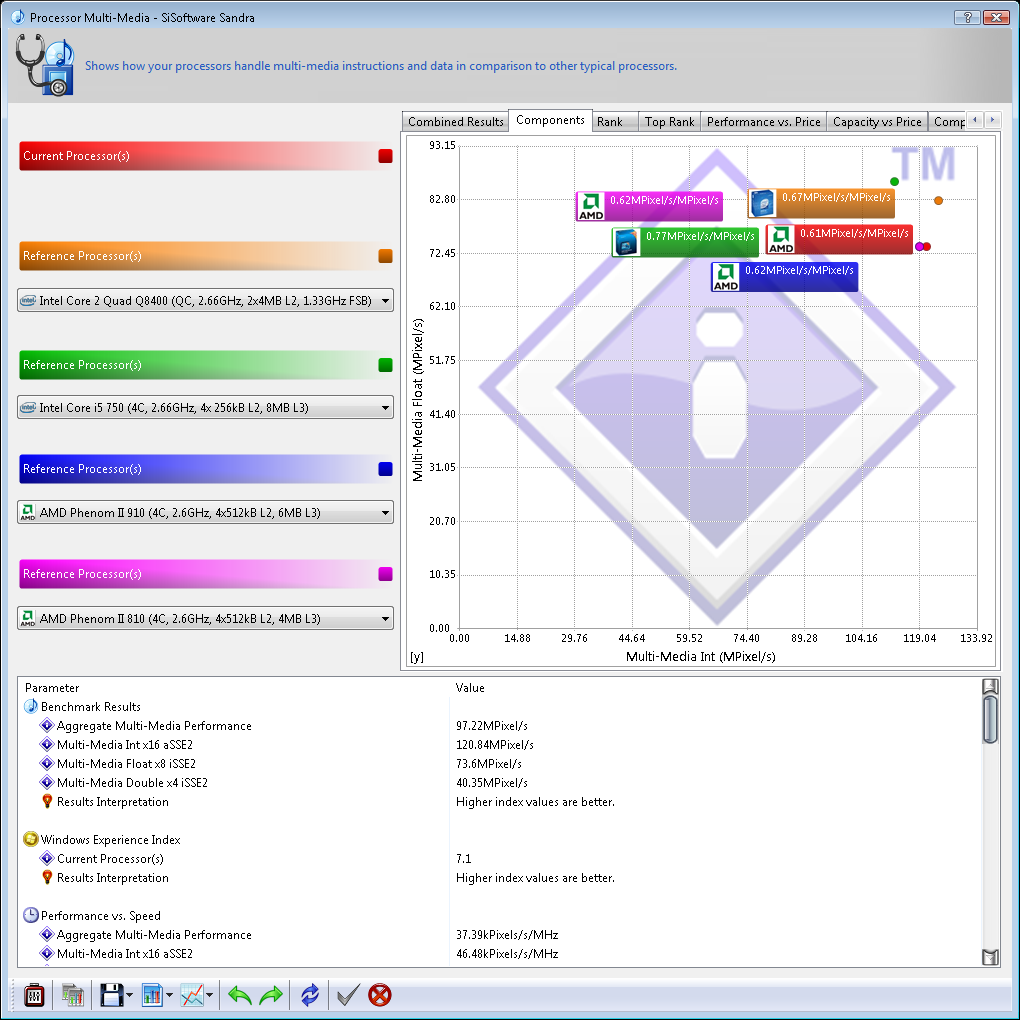
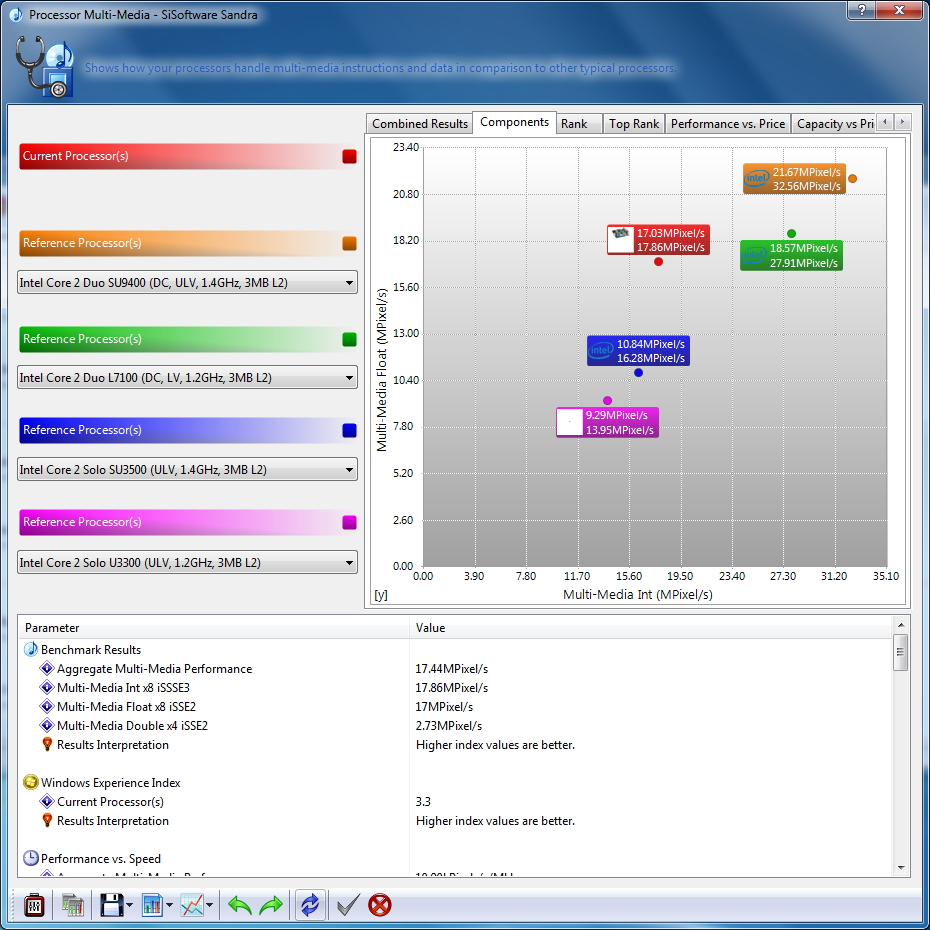
Multimedia
While the multimedia performance is impacted by the performance of the processor, it is also measures the ability of the system to play back multimedia conted such as movies, music, etc. as a whole. The increase of the performance in the Aggregate Media perfomance was extraordinary in the JNC84-LF. As can be seen from the pictures below the performance of the JNC84-LF is almost 5 times that of the ION-TOP.
| JNC84-LF | ION-TOP |
 |
 |
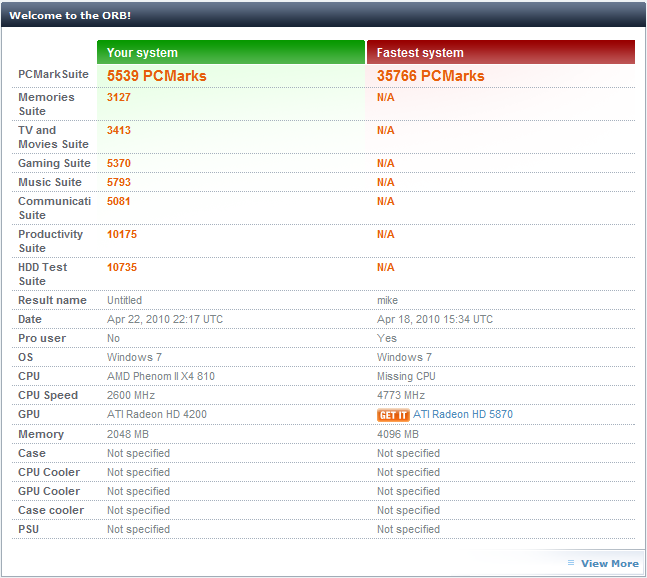
PCMark Vantage
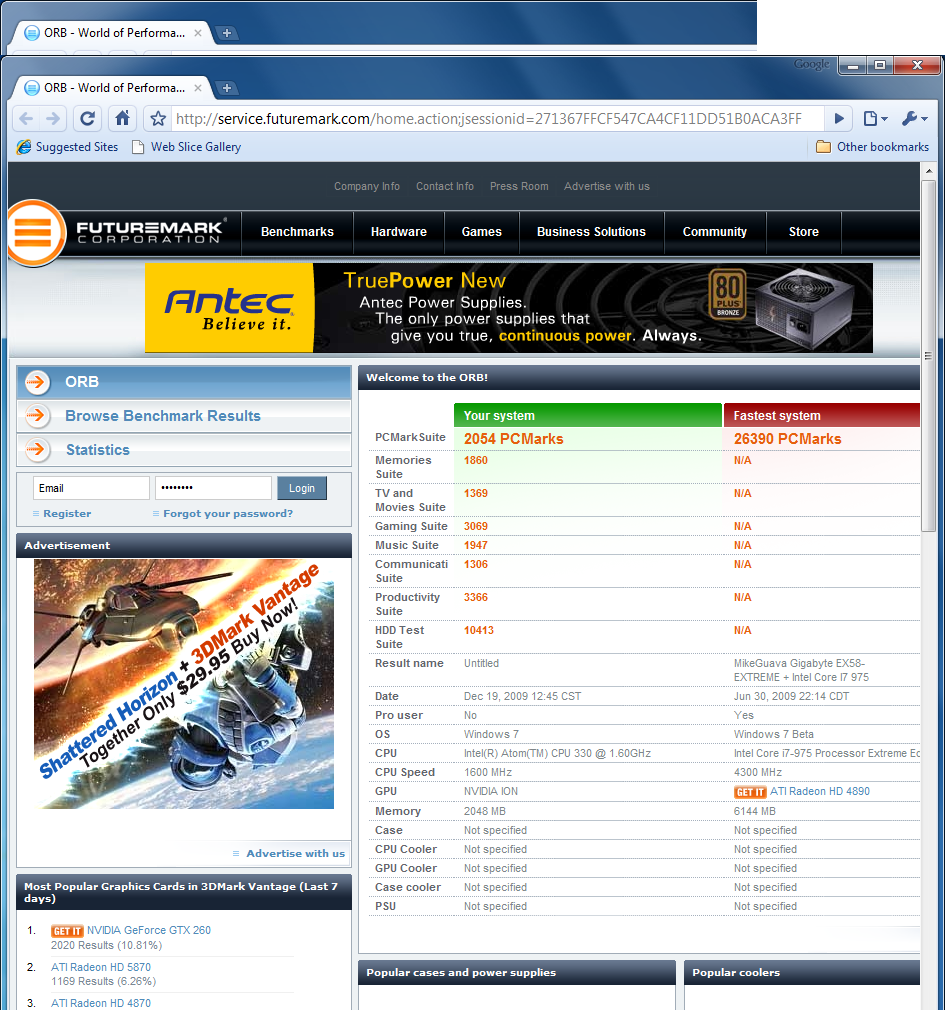
Casting aside induvidual benchmarks, PCMark focuses more on the performance of a PC as a whole by determining how well the machine runs certain tasked that emulate day to day user interaction with the computer. The overall benchmark of the JNC84-LF was more than double that of the ION-TOP.
| JNC84-LF | ION-TOP |
 |
 |
–~~~~~~~~~~~~–
Performance Test 7.0
Performance test is another synthetic test that generates results based on the performance of individual parts. In this particular benchmark, we are going to be taking a look at the 2D and 3D graphics benchmark and comparing it to the performance obtained with the ION-TOP.
2D Graphics
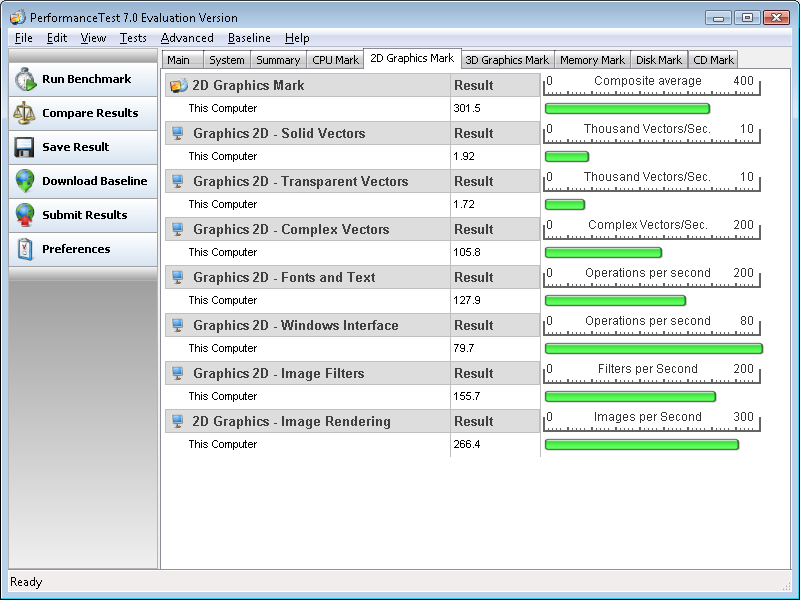
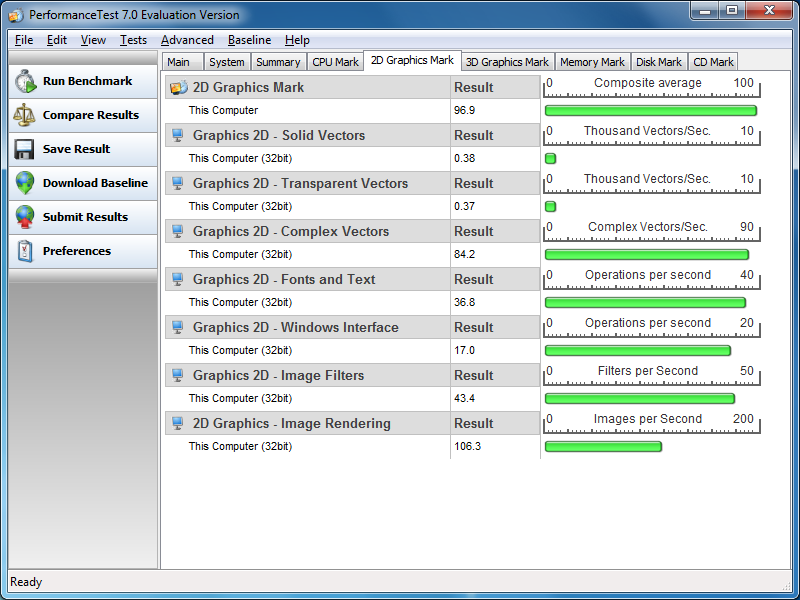
The 2D performance is used in several areas of the computer. Rendering web pages and such depends on 2D performance of the graphics card. When the JNC84-LF is compared with the ION-TOP several performance gains become evident. If we take a look at the overall scores of each of the systems, the performance of the ION-TOP hovers around 96 points while the the JNC84-LF performs at three times as much – 300 points.
| JNC84-LF | ION-TOP |
 |
 |
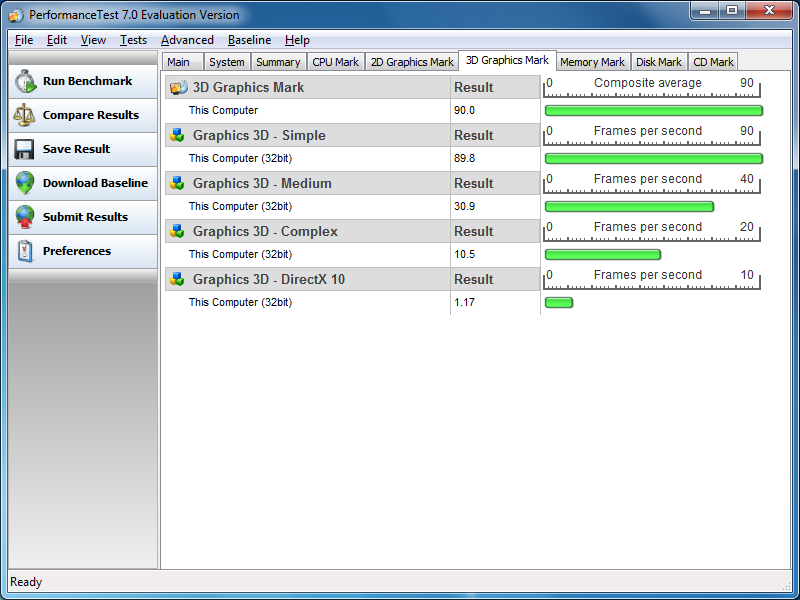
3D Graphics
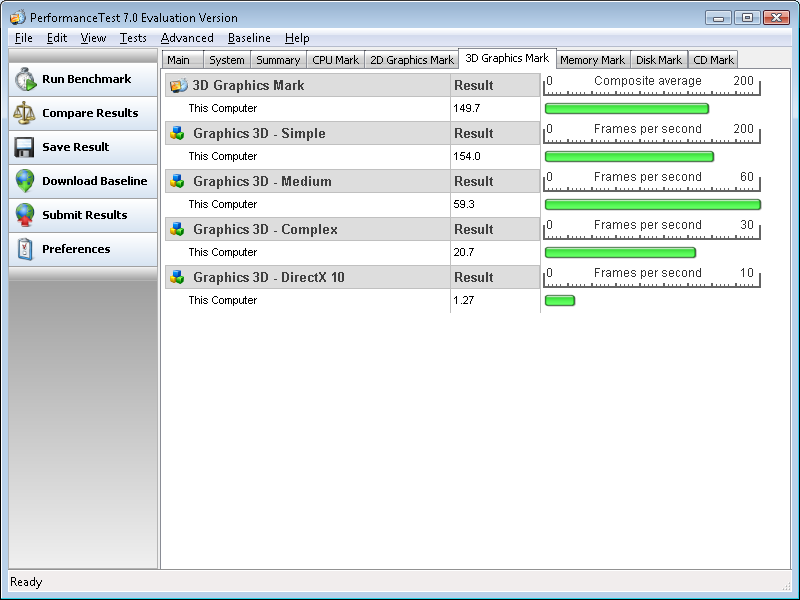
The 3D performance of the a computer does not just involve gaming. Simple Windows services such as Aero aslo use 3D graphics. The higher the score in this benchmark, the smoother the computer will be able to render such services under normal operation. The gain for the JNC84-LF is not as significant in this departments as it was in the in the case of the 2D benchmark. The overall score for the JNC84-LF was 149 while the score for the ION-TOP was 90. Interestingly enough, both systems display almost identical results in the DirextX10 test. DirectX10 is a collection of Microsoft multimedia API and is used in popular games today.
| JNC84-LF | ION-TOP |
 |
 |
–~~~~~~~~~~~~–
Conclusion
The purpose of purchasing an IPC board is to save money while retaining the flexibility of having an HTPC versus an embeded system. The problem occurs, however, when these embedded systems just don’t have enough juice to handle the your every day tasks. With the JNC84-LF, Jetway has provided a viable solution to that problem. The JNC84-LF both saves space with its micro-ATX form fact while keeping the costs down. The it also gives the user the flexibility of a full fledged motherboard with on-board graphics. JNC84-LF can be bought online for approximately $119.00. This makes it slightly pricier than the average board, however, it more than compensates the costs with the its features and versatility. With the ram and the processor used in the test ($47 for the RAM 2 GB and $139 for the processor Phenom 810) you will still have a 300 compact system that will not envy anything you can buy from retail.

| Supported CPU | |
| CPU Socket Type | AM3/AM2+/AM2 |
| CPU Type | Phenom II / Phenom / Athlon II / Athlon64 /Sempron |
| FSB | 2600MHz Hyper Transport (5200 MT/s) |
| Chipsets | |
| North Bridge | AMD 785G |
| South Bridge | AMD SB750 |
| Memory | |
| Number of Memory Slots | 2×200pin SO-DIMM |
| Memory Standard | DDR2 667/800 |
| Maximum Memory Supported | 4GB |
| Channel Supported | Dual Channel |
| Expansion Slots | |
| PCI Slots | 1 |
| Other Slots | 1 x mini PCI-E |
| Storage Devices | |
| SATA 3Gb/s | 4 |
| SATA RAID | 0/1/5/10 |
| Onboard Video | |
| Onboard Video Chipset | ATI Radeon HD 4200 |
| Onboard Audio | |
| Audio Chipset | Realtek ALC662 |
| Audio Channels | 6 Channels |
| Onboard LAN | |
| LAN Chipset | Realtek 8111DL |
| Max LAN Speed | 10/100/1000Mbps |
| Rear Panel Ports | |
| PS/2 | 1 |
| Video Ports | D-Sub + DVI |
| HDMI | 1 x HDMI |
| USB 1.1/2.0 | 6 x USB 2.0 |
| eSATA | 2 x eSATA 3Gb/s |
| Audio Ports | 3 Ports |

[…] Jetway JNC84-LF M-ITX Motherboard @ TechwareLabs […]
[…] Jetway JNC84-LF | TechwareLabs […]
[…] Jetway JNC84-LF M-ITX Motherboard @ TechwareLabs […]
[…] TechwareLabs checks out the Jetway JNC84-LF M-ITX Motherboard […]
[…] ASUS Maximus III Gene Motherboard @ Hardware Secrets Jetway JNC84-LF M-ITX Motherboard @ […]
[…] JNC84-LF @ TechwareLabsMSI 890FXA-GD70 @ Hardware […]
[…] This post was mentioned on Twitter by ChrisTWL, Cory Blomenkamp, Tom Gowing, mattandroTWL, willhalsteadTWL and others. willhalsteadTWL said: Review: Jetway JNC84-LF – http://www.techwarelabs.com/jetway-jnc84-lf/ […]