CrystalDiskMark:
This program is used to measure the read and write speed of drives, by reading and writing files of various sizes.
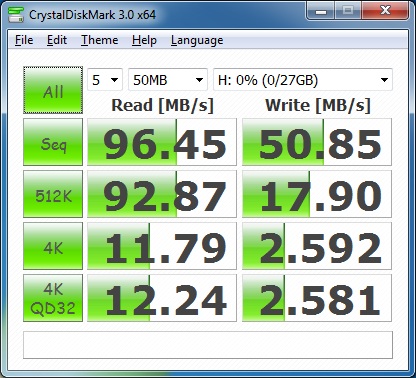
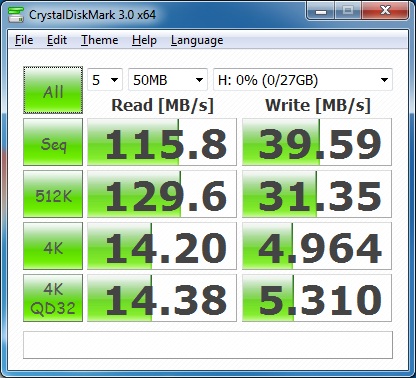
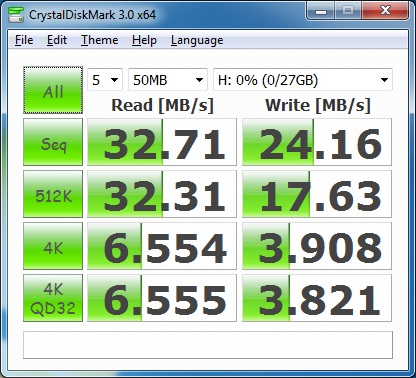
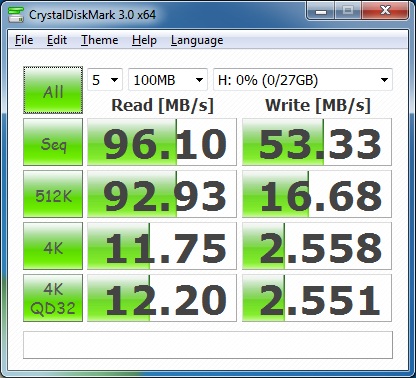
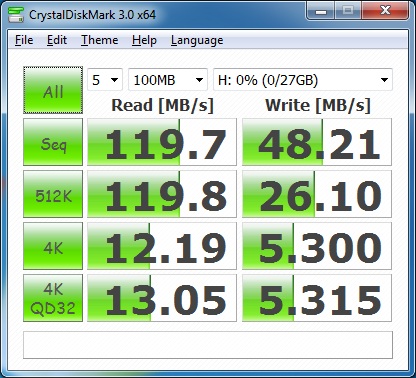
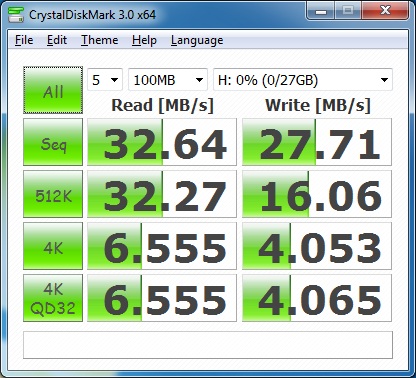
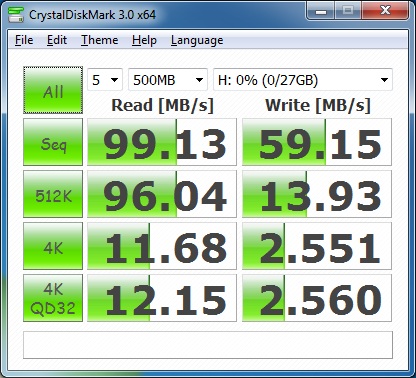
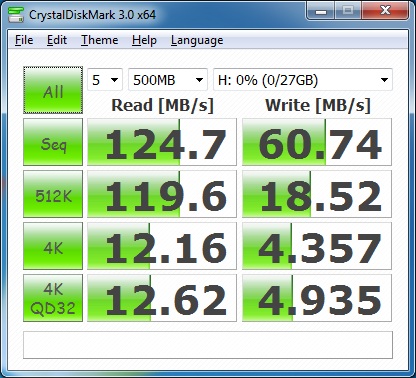
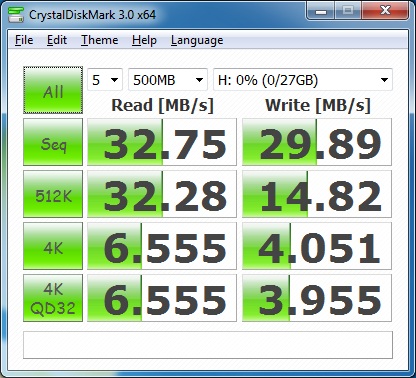
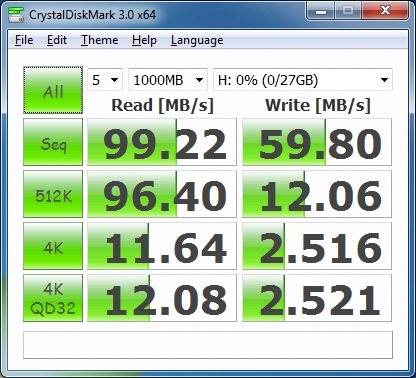
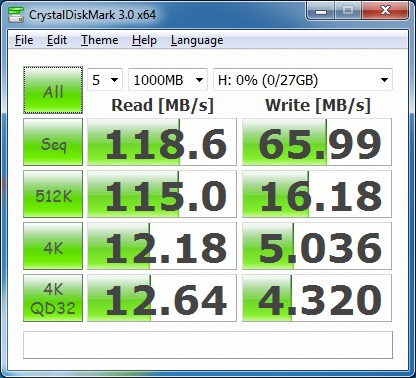
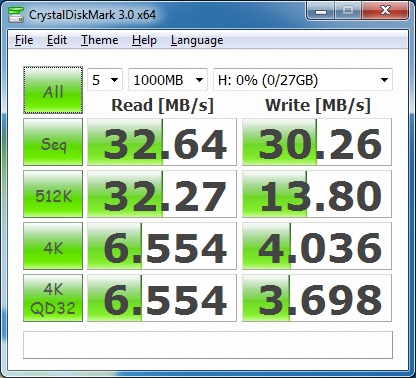
We can see in the USB 2.0 tests that it doesn’t really matter the file size that the drive is given, it keeps at the same speeds for the most part. This is because the drive is consistently saturating the USB 2.0 bandwidth. When looking at the write speeds for the normal mode and turbo mode, we can see the trade off of performance in large block transfers vs performance in small block transfers. We can see that the sequential write speed is actually faster in the normal mode, up until you reach the 500 MB size. Once you start getting into the larger file sizes, turbo mode begins to shine. The read speeds are a different story however, with turbo mode having the distinct advantage no matter what file size the drive is presented. The read speeds are quite impressive and are more akin to what you would expect from a low cost SSD than a flash drive.
Conclusion:
The bundled software and caching ability set this drive apart from others. If you’re going to get this drive, you’re best off getting it with the bundled Ceedo software. The only exception would be if you plan on booting an OS from it. The drive’s caching mechanism is really there to help speed up applications. If you’re not going to be running applications on the drive, then the caching isn’t going to be doing you that much good. The price of $139 for the model we reviewed can be a little hard to swallow, but you have to keep in mind that you’re also partially paying for the full Ceedo Personal suite. This is also some of the price we pay for being on the bleeding edge of tech. If Super Talent is able to fix the caching issues that were in our review sample, then this will make an excellent purchase for people that want fast productivity on the go.

This drive is being sold most everywhere on the web for $59. That seems to be the sweet selling point for USB 3.0 32GB flash drives.